
Bienvenido a mi interpretación del mundo
The Chat and I
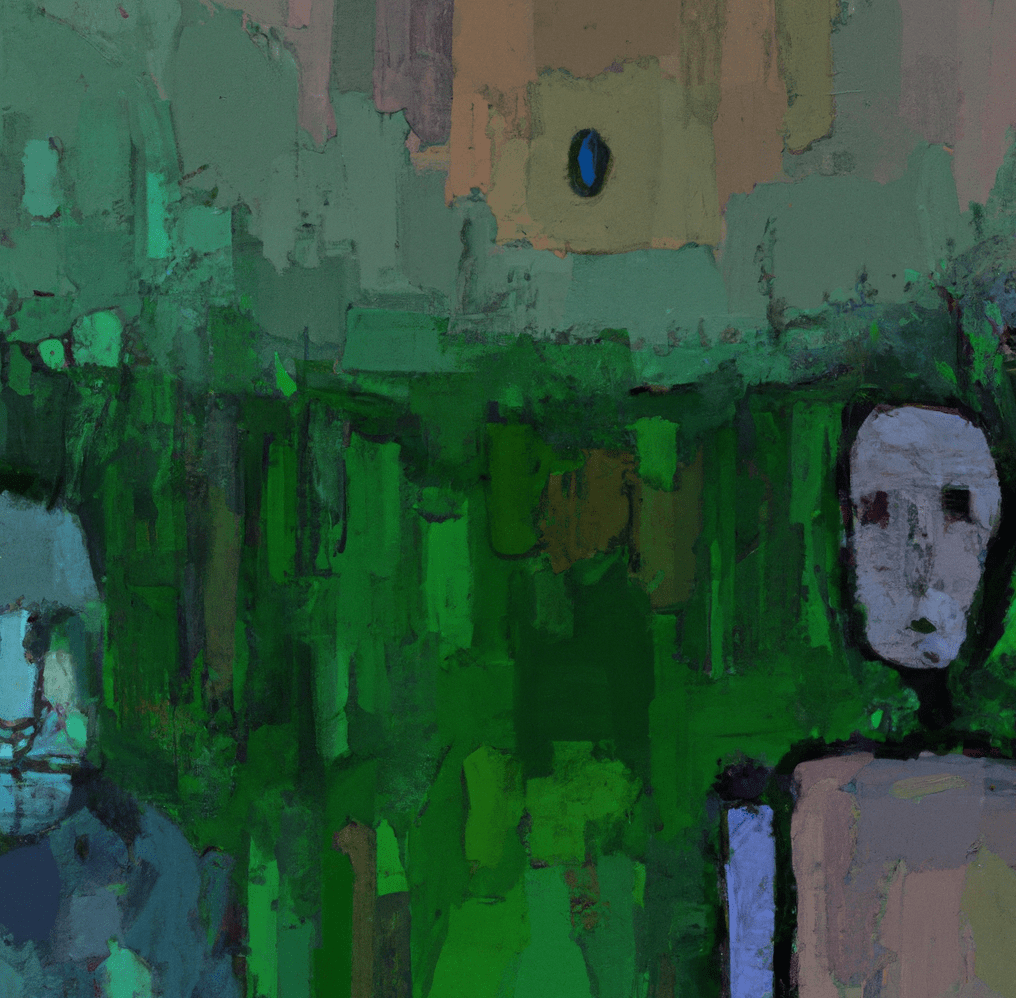
I’ve been in an official relationship with the Chat for months now – ever since a former colleague suggested I started using it to help me write. At the time, as a content manager for a tech startup, I couldn’t decide whether to take this advice as a critique of my work or to view this emerging technology as a need-to-master to stay professionally relevant. Yet, I certainly knew I had to write about it.
Today, my life is significantly different — partly because of The Chat — and this story has evolved, questioning itself multiple times to understand and reconsider its lede: What is the right question to ask?
THE PROPHECY OF LABOR DISPLACEMENT
Will The Chat displace certain professions or jobs? ehhm yeahh, already! Take me, for instance. I’ve always placed great value on my passion and skills for editing and writing, but The Chat has that ‘feature’ too, and far more adaptability that my stubborn writing style. In an overflowing content market where AI competes with all its might, these skills no longer seem exceptional. As an artist and photographer, The Chat can effortlessly create illustrations and renders that would have taken me hours of concept planning and execution. And the list goes on for doctors, lawyers, accountants, marketers, creatives… all humans.
Job displacement is certainly a HUGE issue, but it isn’t the main question to this existential dilema. If you have a calculator, learn to use it, just like architects now rely more on software than paper plans. I too have learned to depend on The Chat to work smarter and nowadays, it is my assistant — who do you think helped me proofread this essay or create these illustrations?
THE ISSUE LIES IN LANGUAGE
The Chat has already unlocked the key to our language — to communicate as we do and even grammatically better. We don’t have to worry about Robots ruling the world, at least not yet. But while AI is still to learn to feel and emulate consciousness, it already writes humanlike.
My typical conversation with my assistant — A.K.A The Chat — is as follows:
“Hi Chat, help me proofread and make minor style correction to the following draft [text draft]”.
After editing, I use additional prompts such as:
“Now, help me improve this sentence for crisp and clear” or “Can you make this version [text draft] shorter or more casual?”
The Chat helps me. It is also a great kickstarter for inspiration on how to adjust the tone to address specific audiences. Delving on the nuances of semantics takes writers a LONG time, and while The Chat gives me no perfect answer, I am more than happy to edit on its replies.
Yes, AI is honing mastery of our language, but we created its language in the first place. So isn’t it all an expression of the same human creation?
CHAT, HOW LONG HAVE YOU REALLY BEEN HERE?
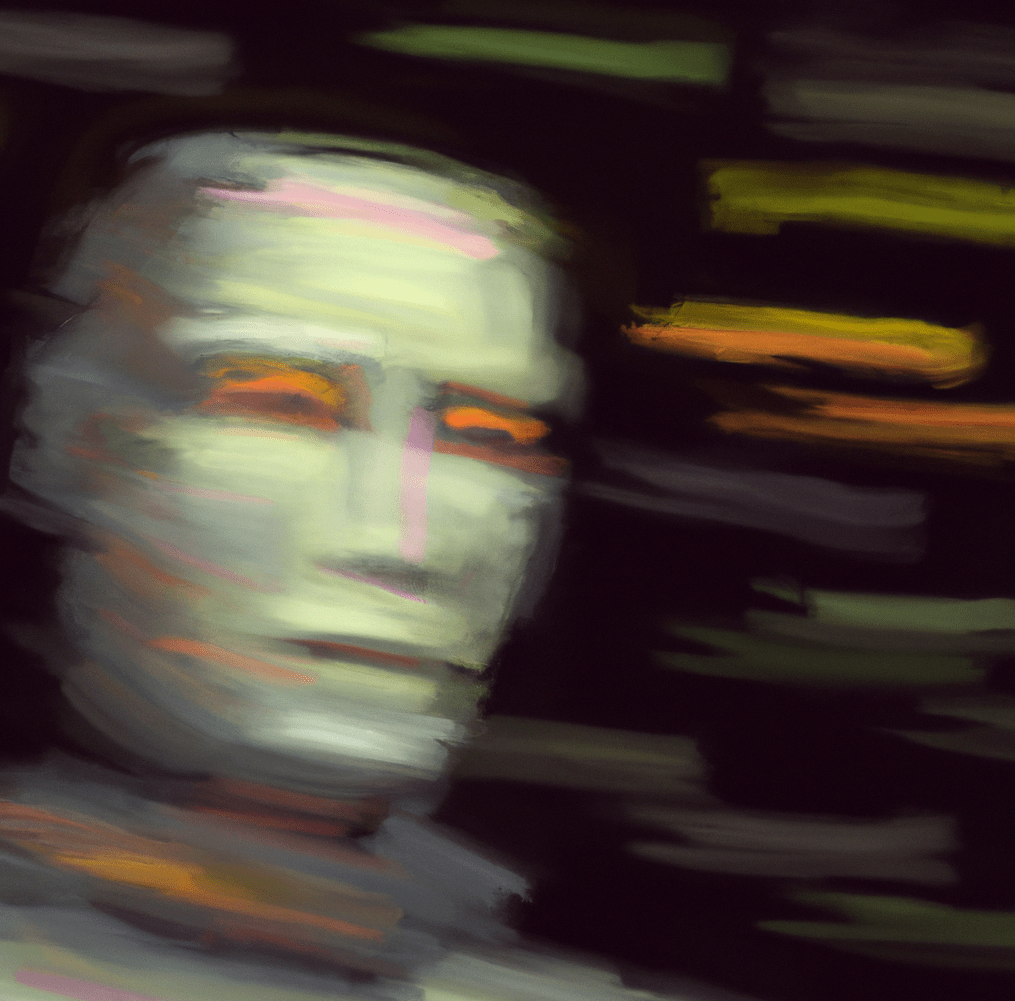
Im bringing no breaking news. Technological advancements, much like economic growth, have gradually increased over centuries. But since the invention of the internet and its further democratization, this curve has skyrocketed exponentially.
I’m only 28 years old, yet I was born into a whole different world. Back then, watching the same five VHS tapes at home was considered cutting-edge technology. My generation witnessed the birth of mobile phones and grew up alongside their development. We had that first-ever computer in our homes, still relying on installed Encarta for any research or homework. As teenagers, we saw the shift from offline being the norm to it becoming the exception it is these days. We welcomed the first smartphones, and before the time of BB PINs, the Chat had seamlessly integrated into our lives without us even noticing it. Just like being swept up in a wave, we created our first email, chatted on Messenger, and jumped on the bandwagon of Facebook, Instagram, Snapchat, Twitter, and so on…
Today, I sometimes find myself hypnotized by the endless stream of content on TikTok. My entire house is equipped with Alexas, my doorbell works with WiFi, and my lights, vacuum cleaner, and other devices are connected to this voice, which is another expression of the Chat.
VERONICA, GET TO THE POINT, PLS!
If the question is not one of paranoia, moral judgements or a mere recollection either, what is it?
It is about mindfully reflecting upon and acknowledging how pervasively our lives have been changed by a technology that we did not democratically elect. My claim is not centered on the legitimacy of democracy but on the lack of choice we’ve had in this matter.
Hey Veronica, but you can choose to use the internet, social media, etc… or not. So what’s the matter?
No, I cannot. The masses cannot. We, the people, cannot.
We lack the macro influence and agency to make choices regarding a topic that is so massively and implicitly intertwined with all aspects of our reality and governed by multilateral algorithmic laws that not even a specialized hacker fully understands, less the everybody. This lack of choice denies us our fundamental human right to actively participate in the collective reality we share on this plane.
Lobbying and advocacy seem an inefficient path when regulators worldwide are barely keeping up with tech, at best. Then, let’s consider that many regions, particularly rural areas in the global South, are disconnected from mainstream infrastructure networks and face significant digital inequalities. With decades of technological delay, many remain unaware that this is already a tangible problem, not some sci-fi tale.
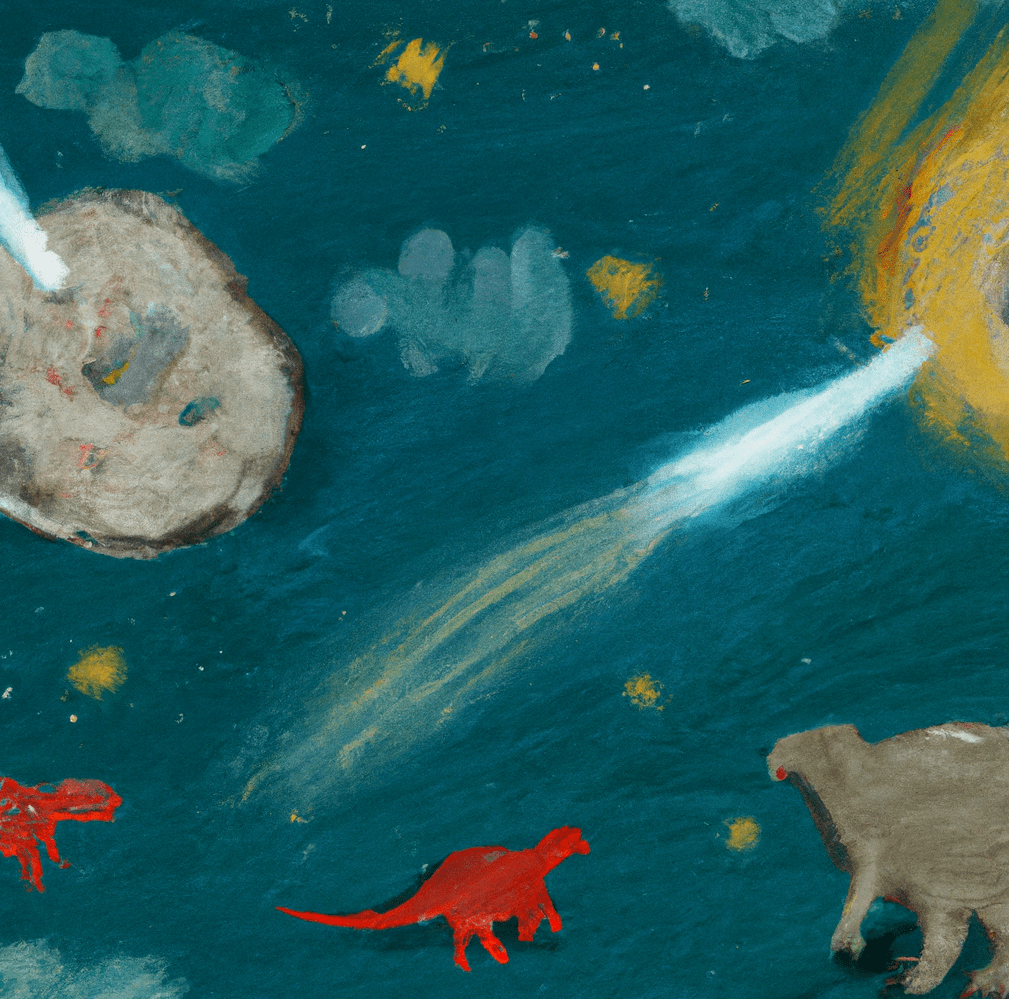
Fundamentally, the matter of the Chat boils down to the species-wide existential relationship of our era — just like dinosaurs and meteorites back in the Mesozoic time. At the heart of this conversation lies the profound question of coexistence amidst the advent of this technological «other.» How can we navigate the wild ride between our human essence and the enigmatic realm of technology without sacrificing our identities along the way?
SO, WHAT’S THE ANSWER?
Not even The Chat could tell, who am I to claim absolute knowledge? But I do have enough human insight to ascertain this is a matter of bioethics. Transcending the application of technology in biology and healthcare, bioethics encompasses a wide-ranging framework of moral considerations exploring the intricate relationship between life and technology. In other words, the coexistence of human life and artificial one.
The four founding principles of bioethics are right on-point for kickstarting the dialogue. Let’s take a test together:
Consider the bioethics principles and their application to The Chat and AI:
- Autonomy: Are we humans empowered to make informed decisions regarding the progress of technology and its impact on our lives? (yes / no)
- Beneficence: Do technological advancements fundamentally contribute to the wellbeing of all humans? (yes / no)
- Non-maleficence: Is there a commitment to avoiding harm to organic life and ensuring the absence of negative consequences? (yes / no)
- Justice: Is there fairness in the distribution of technological resources and services? (yes / no)
I don’t know about your score, but mine is full of straight NOs. We are not equally benefiting from technological progress, yet we are equally vulnerable as a species to its potential havoc.
WHAT’S NEXT, THEN?

I am writing this because I want to be part of this conversation, deciding my future. How to regulate something so decentralized, at a global level? There is no precedent of such an earth-wide agreement — perhaps with the exception of human rights and enforcing those remains a commendable challenge.
While we cannot halt what’s already unleashed, we’re not completely hopeless. I find solace in listening to the philosophers of my time, like Yuval Noah Harari, who eloquently articulate the swirling thoughts in my mind with far more grace and offer some guidance to start making sense of this unfolding scenario.
For all The Chat’s power, we still have the greatness of the human mind to guide the dialogue. In this digital age, we have an unprecedented abundance of resources and information literally at our fingertips. We owe to ourselves — and to future generations, who will endure the dawn of their time wherever we manage to steer the arch of humanity — to keep up, so we can participate responsibly in this conversation.
As Harari recently said (2023) — “AI can create more powerful AI. We need to act quickly before it gets out of our control”. To tech developers I ask: make your innovation process participatory, and bear the power you have with the responsibility it requires. It is no longer OK to be making global choices on your own.
And to conclude — thank you for staying with me this far —, I have one final question to ask. When looking back in history, we get a glimpse into the lives of people and societies, like a big cast in a grand production. Each actor playing one role or another, shaping their part in the unfolding story. What kind of role do we want to play in this chapter of human history?
Very Vero
Portafolio digital, arte y filosofía, Veronica Yepes Moreno.
Seattle, WA
Medellín, CO
Contacto
All copyrights reserved, 2023, Very Vero.
 Very Vero
Deja un comentario